
HSRP (Hot Standby Router Protocol)
The HSRP (Hot Standby Router Protocol) is a Cisco proprietary first-hop redundancy protocol (FHRP) designed to allow for transparent fail-over of the first-hop IP router, and has been described in detail in RFC 2281.
[boxads]
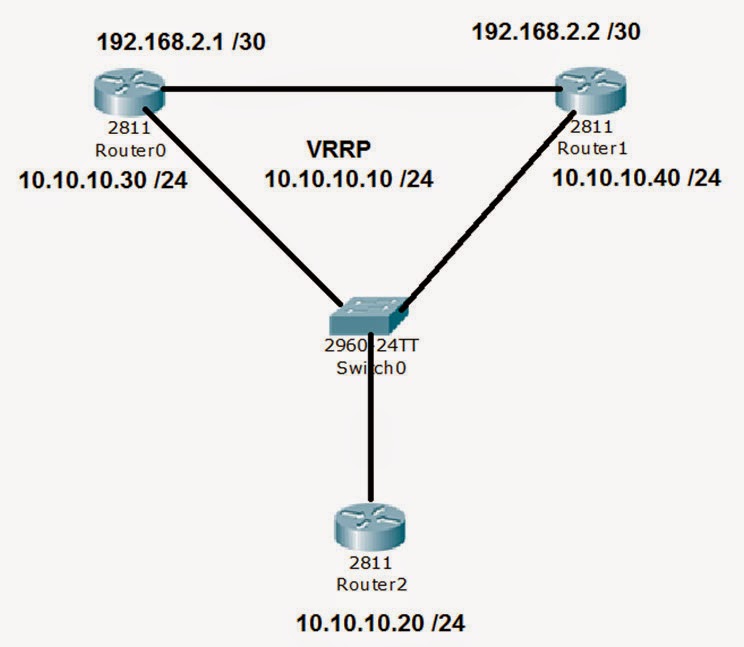
HSRP provides high network availability by providing first-hop routing redundancy for IP hosts on Ethernet, Fiber Distributed Data Interface (FDDI), Bridge-Group Virtual Interface (BVI), LAN Emulation (LANE), or Token Ring networks configured with a default gateway IP address. HSRP is used in a group of routers for selecting an active router and a standby router. In a group of router interfaces, the active router is the router of choice for routing packets; the standby router is the router that takes over when the active router fails or when preset conditions are met. HSRP active and standby routers send hello messages to the multicast address 224.0.0.2 using UDP port 1985.
The virtual router is simply an IP and MAC address pair that end devices have configured as their default gateway. The active router processes all packets and frames sent to the virtual router address. The virtual router does not process physical frames and exists in software only. The active router physically forwards packets sent to the MAC address of the virtual router. The virtual router MAC address is a well know mac-address and it is 0000.0c07.acxx, where xx is the HSRP group member. For example, if the group is 20 the virtual MAC address is 0000.0c07.ac14 (remember that the number in the mac address is expressed in HEX!!!).
When the active router fails, the other HSRP routers stop seeing hello messages from the active router. So, the standby router will be the new active router and, if possible, a new standby router will be elected. Because the new active router assumes both the IP and MAC addresses of the virtual router, the end stations see no disruption in service. The end-user stations continue to send packets to the virtual router MAC address, and the new active router delivers the packets to the destination.
HSRP has 2 timers:
- Hello interval time: Interval between successive HSRP hello messages from given router. Default is 3 seconds.
- Hold interval time: Interval between the receipt of a hello message and the presumption that the sending router has failed. Default is 10 seconds.